


Tshwane Farrier Lecture Day
On the 11th of August Jacques Kruger hosted the Tshwane Farrier Lecture Day with 37 2nd year equine science students.
For performance horses, what happens in the stable is just as important as what happens in the arena. Poultices and topical care products help manage heat, swelling and minor injuries, supporting soundness and comfort through a busy season.
At Colesdale, the Endeavon range is designed to give owners, riders and farriers practical, cost-effective tools to support legs, hooves and muscles before and after work.
In this blog, we look at how Endeavon poultices and topical care can fit into your everyday routines around competitions, injuries and recovery. Our team has also put together a list of clear, step-by-step usage ideas.
Before competitions, the aim is to support circulation, reduce the risk of strain and make sure your horse feels comfortable stepping off the box and into the warm-up.
Using the right poultice or topical product as part of your pre- and post-event routine can make a noticeable difference to how quickly your horse recovers between classes or race days.
The day before:
On the morning of competition:
This basic routine sets a good foundation for any poultice or topical product you then decide to use.
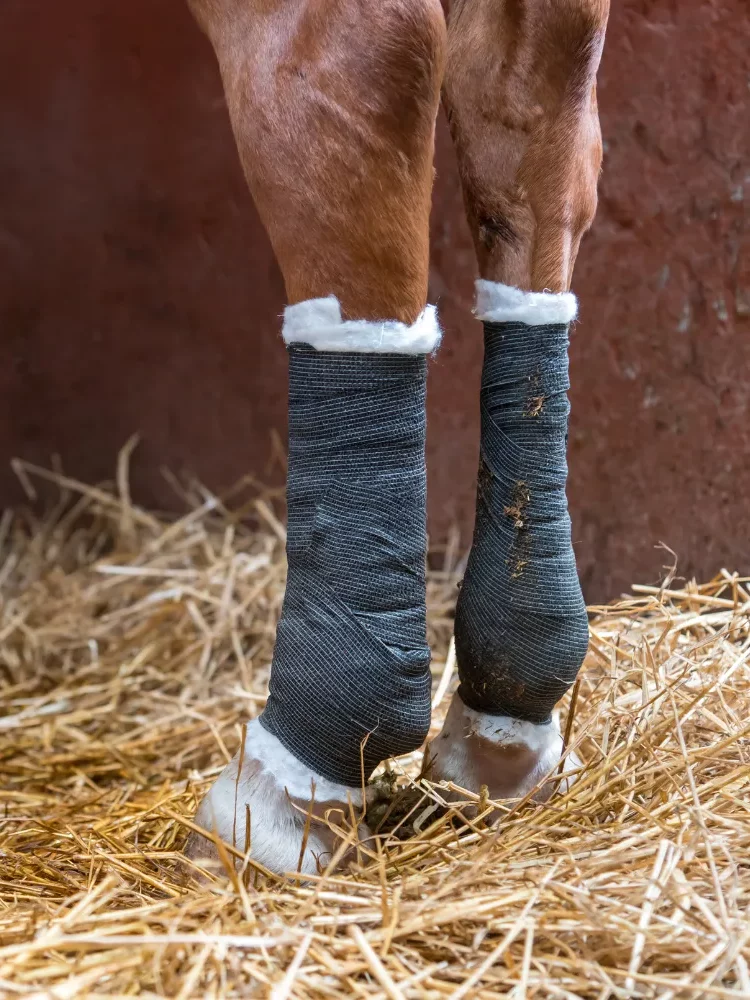
Poultices are generally used to draw out heat and support circulation after hard work or to assist with localised swelling.
They can be particularly useful after jumping on firm ground, gallops, long endurance rides or intense schooling sessions.

1. Cool the legs:
2. Apply the poultice:
3. Monitor time:
Follow the product’s guidance for how long to leave the poultice on; do not leave bandages on indefinitely.
4. Remove and check
Remove the bandages and poultice, rinse the area, then run your hands down the legs again to check for any changes.
Practical Tip:
Keep a simple “leg log” for each competition or intense schooling day, noting which legs you poulticed, any swelling and how the horse felt the next day. Over time this helps you spot patterns early, long before a small niggle turns into a bigger issue.
Topical care products such as liniments, gels or clay-style applications can help support muscles and joints, particularly after knocks, minor strains or hard work.
They are not a substitute for veterinary care, but they can form a useful part of your overall management strategy.
1. Assess first
Check for cuts, lacerations or obvious lameness. If in doubt, call your vet before applying anything.
2. Cold therapy
Use cold hosing or an ice pack wrapped in a cloth for 10–15 minutes at a time in the first 24 hours.
3. Apply topical product
Once the area is clean and cooled, apply the recommended thin layer of your chosen topical preparation.
4. Rest and monitor
Give the horse a quieter day or two and watch for changes in swelling, heat or movement.
Practical tip
Teach your horse to calmly accept handling of all four legs, including the inside of the hind legs and around the hocks, when there is no pain. This makes it far easier and safer to apply topical care when you genuinely need to.
Recovery is when the real progress happens. By combining poultices, topical care and good management practices, it becomes possible to keep horses performing consistently while reducing the risk of overuse injuries.
Endeavon’s broader supplement range, including electrolytes and joint products, pairs well with sensible post-work routines to support overall recovery.

Morning:
Midday:
Evening:
Practical tip:
Plan your competition calendar with recovery in mind: avoid stacking too many hard events close together and schedule specific “easy weeks” where intensity drops, even if frequency of light work stays the same.
Poultices and topical care are excellent management tools, but they should always sit alongside veterinary guidance.
If a horse shows persistent lameness, significant swelling, obvious pain or no improvement after a day or two of sensible care, professional assessment is essential.
On the 11th of August Jacques Kruger hosted the Tshwane Farrier Lecture Day with 37 2nd year equine science students.

On the 2nd of October 2026 Colesdale and our brand ambassador Jacques Kruger are hosting a one-of-a-kind farrier day.

We couldn’t be prouder to welcome Jacques Kruger as a Colesdale Ambassador. Welcome to the Colesdale family, Jacques.